
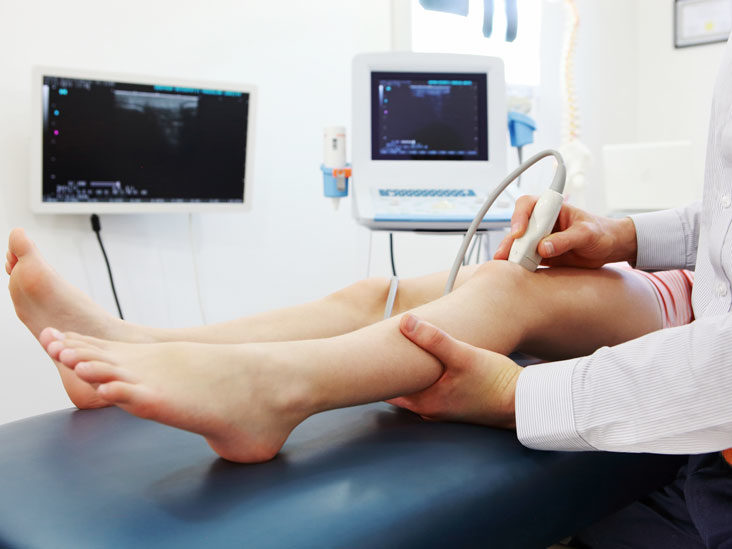
The Doppler is an examination that allows you to explore the blood flow in the arteries and veins. Its purpose is to detect the possible presence of an obstacle that would prevent proper irrigation of the organs. It is prescribed in case of suspicion of phlebitis or atheroma plaques.
What is the Doppler used for?
- The Doppler studies the flow of blood in the arteries and veins, thus giving information on its flow conditions and the proper irrigation of the organs. Coupled with ultrasound, it provides information on the shape of the vessels.
- This examination can be used on the vessels of the limbs, neck, abdomen …
- He looks for disturbances in blood flow that may be related to an obstacle or a narrowing of the vessel.
- It may be a blocked clot in a vein (this is the phlebitis), a narrowing of the caliber of an artery (these are atheroma plaques) …
What is a Doppler?
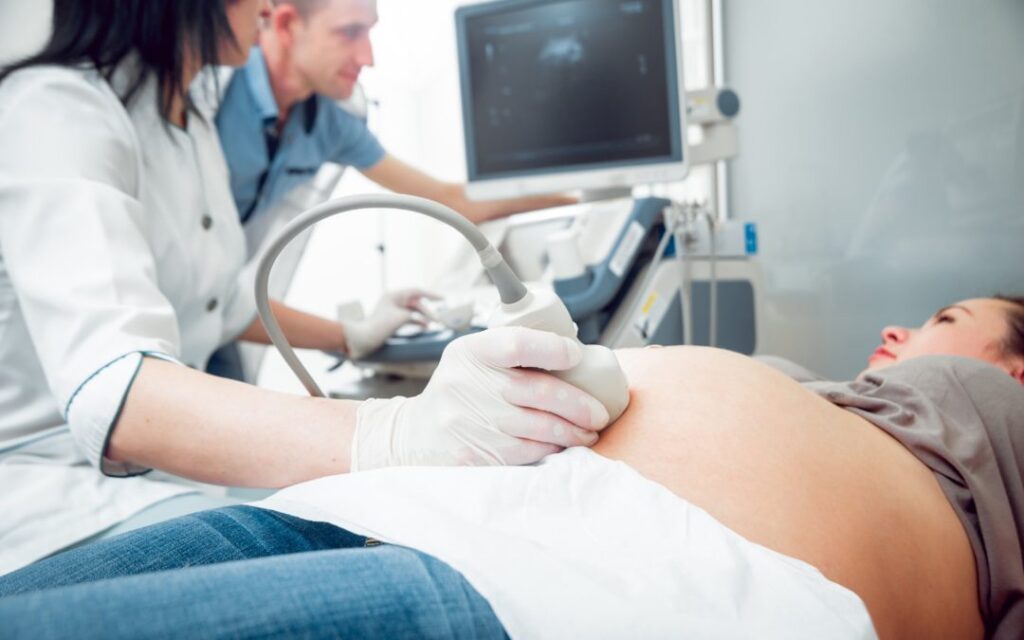
Doppler uses ultrasound, not x-rays. It works on the same bases as ultrasound, with which it is very often associated.
Its principle consists in studying the flow of blood in a vessel. A pen-shaped probe emitting ultrasound is applied to the region to be examined. The ultrasound wave propagates in the tissues and is returned in the form of an echo by the various organs it encounters. This signal is analyzed and transformed into a sound, a curve or a color reflecting the speeds of blood circulation.
The Doppler system is most often integrated into the ultrasound machine. The room where the Doppler is performed consists of:
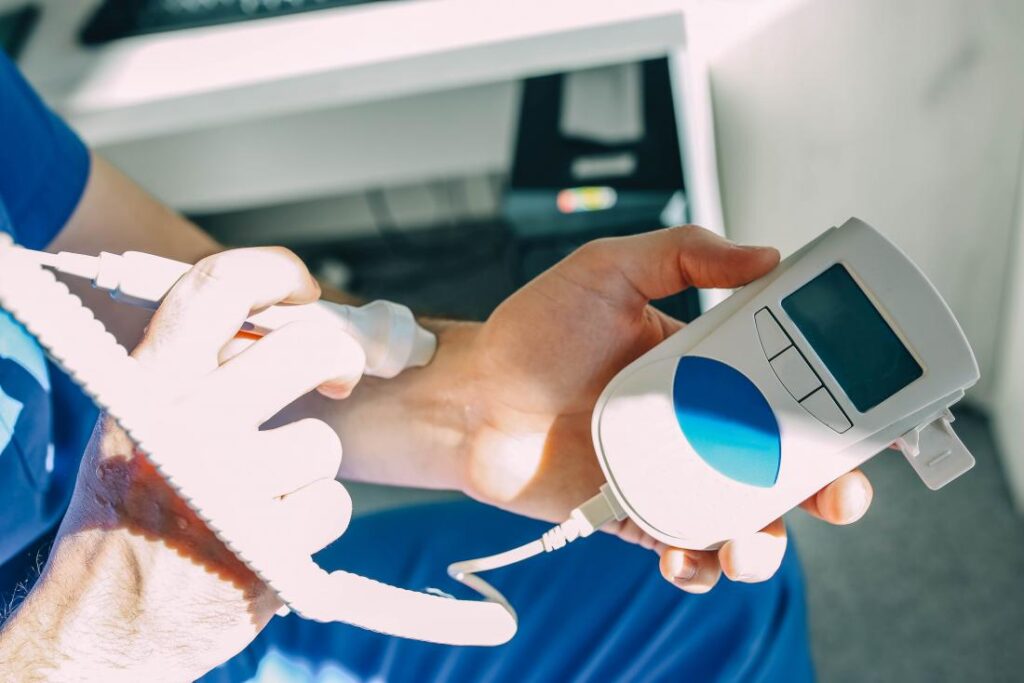
- The probe that emits the ultrasounds and collects the signal after it has passed through the tissues. It is connected to the device by a cable.
- Video screen on which the images are viewed.
- The computer system.
- The control panel consists of multiple keys and functions.
There are three different types of Doppler:
- The continuous Doppler which translates the speed of blood flow into a sound that can be analyzed by the ear of the radiologist during the examination.
- Pulsed Doppler which translates velocity into a graph.
- The color Doppler which is associated with ultrasound to give an image of the vessel colored by blue or red depending on the direction of blood circulation.
How is a Doppler performed?
- This examination is carried out by a specialist in radiology.
- After reporting your arrival at reception, you will wait a few minutes in the waiting room.
- Before the exam, you will go to the cloakroom to undress (you will be told which clothes to take off).
- Do not forget to go to the toilet for more comfort.
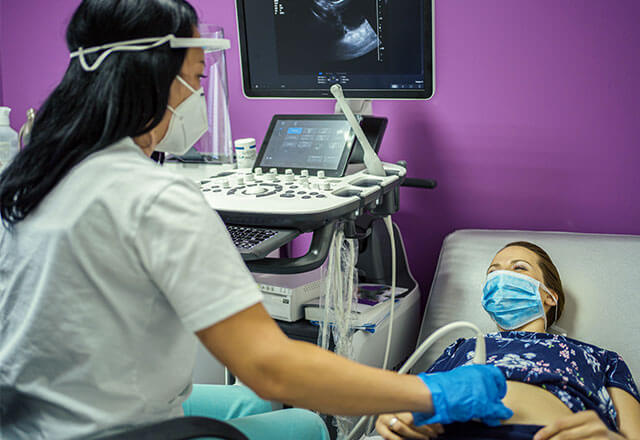
- During the exam, you will lie on a bed, usually on your back.
- A gel will be spread on the skin to allow good transmission of ultrasound. The probe (like a pen) will be moved next to the vessels to be explored. The radiologist will ask you to change position during the examination and/or hold your breath.
- It takes about 10 to 20 minutes. It’s a quick review!
- The results: the radiologist will give you an initial comment. The final report will be sent to your attending physician as soon as possible. He will explain the results to you and tell you what to do.
Is the Doppler painful?
It is a completely painless examination.
How to prepare for a Doppler?
- No preparation is necessary.
- No need to fast. You can eat and drink normally.
- Consider bringing:
- The letter from your doctor and your prescriptions.
- Your social insurance cards.
- Your old shots that will allow a comparison.
What are the risks of a Doppler?
There are not any. Ultrasounds are harmless.


where to buy diflucan in canada
cheap tadalafil canada
can i buy accutane online
ilogidis.com
이때 Fang Jifan은 배 옆에 기대어 그를 배웅하러 온 수많은 사람들을 바라 보았습니다.
cheap accutane online
dexamethasone 40 mg daily
clomid prescription cost
can i buy toradol over the counter
furosemide 40 mg tablet price
buy effexor
54899 prednisone
500mg amoxicillin capsules
glucophage 1000
vermox price in south africa
accutane 50mg
lyrica brand name
cost of diflucan in india
What a information of un-ambiguity and preserveness of precious know-how concerning unpredicted feelings.
gruppa365-diploms-srednee.ru
Howdy very cool web site!! Guy .. Beautiful .. Superb .. I’ll bookmark your site and take the feeds additionally? I am glad to seek out a lot of helpful information here in the publish, we’d like develop more strategies on this regard, thank you for sharing. . . . . .
https://landik-diploms-srednee.ru/
Greetings I am so grateful I found your website, I really found you by mistake, while I was researching on Digg for something else, Anyways I am here now and would just like to say kudos for a marvelous post and a all round interesting blog (I also love the theme/design), I don’t have time to browse it all at the minute but I have book-marked it and also added your RSS feeds, so when I have time I will be back to read more, Please do keep up the superb job.
http://www.orik24-diploms-srednee.ru
baclofen 10 mg tablet price
metformin generic cost
buy clomid 100mg
lyrica price in canada
vermox cost
dexamethasone online pharmacy
propecia buy canada
where to buy azithromycin 500mg
best price for advair
best advair
modafinil tablet
animehangover.com
“무슨 말을 그렇게 많이 하느냐!” 홍지황제는 참을성이 없었다.
vermox medication in south africa
atomoxetine
flomax 400 mcg
how much is doxycycline 100mg
can you buy zithromax over the counter in mexico
diflucan 200 mg capsule
doxycycline cheap australia
buy flomax 0.4 mg
furosemide 40 mg buy online
purchase prednisone online
how much is flomax
best advair
where to buy diflucan 1
where can you get diflucan
ventolin price uk
how to get metformin without prescription
albuterol for sale online
prescription propecia 1mg