
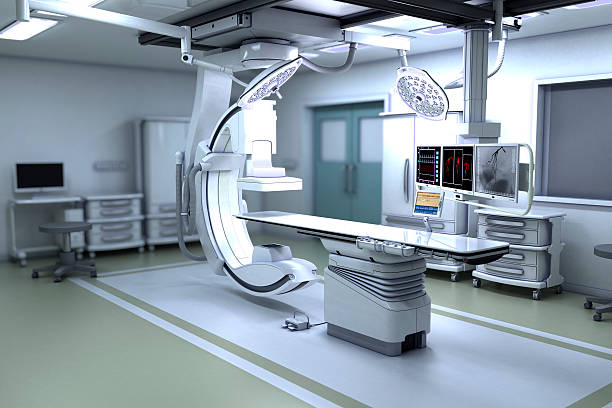
What is an angiogram?
Angiography or arteriography (means the same) is a diagnostic radiological test to obtain very precise information on the state of your arteries (blood vessels) . Angiography can be used to visualize any of the arteries in the human body. This test is also sometimes known as catheterization.. Vascular and interventional radiologists perform this test. To do this, a catheter (very small plastic tube) is inserted into the artery or arteries to be studied and iodinated contrast is injected through it (the same one used for a CT scan). While the contrast is circulating through your arteries, numerous x-rays are taken or a film is made, thus being able to know in real time how the blood circulates through your body.

Although other medical tests such as physical examination, Doppler ultrasound, computerized axial tomography (CAT), and magnetic resonance imaging (MRI) can visualize the blood vessels, angiography may be necessary to see them in more detail and obtain crucial information prior to surgery. treatment planning.
Why do I need an arteriography?
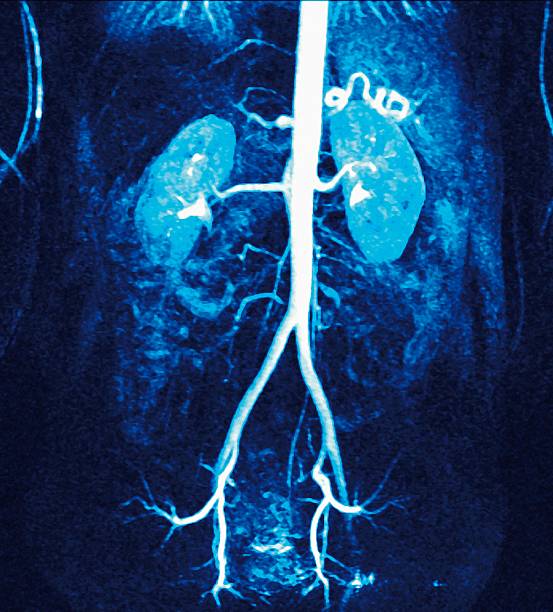
One of the most common reasons for needing an angiogram is to have symptoms that suggest a blockage of the artery . For example, a blocked artery in your leg can cause pain when you walk. Blocked arteries in the kidneys can cause increased blood pressure, and blocked arteries in the brain can cause vision problems and weakness of a part of your body or predispose you to stroke.
An angiogram can identify exactly where an artery is blocked, as well as the severity and cause of the blockage. The two most common causes of blocked arteries are blood clots (embolisms) and atherosclerosis .
Another common reason for needing an angiogram is the presence of an aneurysm . An aneurysm is a dilation of an artery that, if ruptured, causes severe internal bleeding.
Liver arteriograms are performed primarily for the study and treatment of tumors .
Before the angiography begins, a member of the Vascular and Interventional Radiology team (doctor or nurse) will talk to you and explain the procedure in detail and answer any questions you may have.
How is it the procedure? Hurts?
An arteriography consists of three steps:
- Insertion of a small catheter (plastic tube) into one of your arteries.
- Contrast injection (X-ray dye) while X-rays are taken.
- Catheter removal.

Catheter introduction
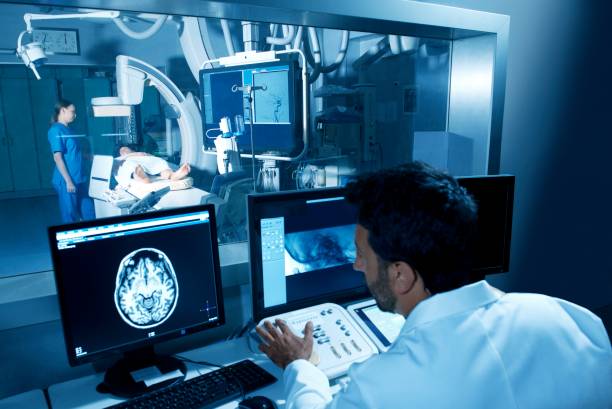
The vascular radiologist will clean the skin in the area where the catheter will be inserted. It will usually be in the groin, upper arm, or wrist. The doctor will then apply a local anesthetic to the skin and deep tissues. After this, you will only feel the pressure of the catheter being introduced into the artery, as the area will be numb. The doctor will guide the catheter through your body until it reaches the artery that will be studied with the help of an x-ray screen (like a television). You will not feel the catheter moving inside your arteries.
contrast injection
When the catheter is in the correct position, the contrast (dye) will be injected through the catheter while x-rays (films) are taken. You will feel slight warmth when the contrast is injected, but this will only last a few seconds and will go away. In many cases, several injections of contrast and several x-rays (films) will be necessary to complete the exam.
Catheter removal
At the end of the exam, the vascular radiologist will remove the catheter from your artery. Pulling out the catheter is painless. Pressure will be applied to the site where the catheter was inserted for about 10 to 20 minutes. This pressure prevents the artery from bleeding.Arteriography usually takes between 45 and 90 minutes .
Sometimes another procedure called angioplasty is done at the same time you have the angiogram. This prolongs the procedure a bit longer. Arteriograms are also used to diagnose difficult problems not resolved by other tests.
How do I prepare for an angiogram?
If you are already admitted to a hospital, the nurses and doctors will give you instructions on how to prepare for the angiography. If you are admitted to the hospital on the morning of your angiography, or if the procedure is performed on an outpatient basis, Follow these instructions or what your doctor tells you:
- FOOD – Do not eat anything solid after midnight the night before your procedure. Yes you can drink liquids.
- MEDICATIONS – Most people should continue to take their prescribed medications. If you are diabetic and take insulin, ask your doctor if it is necessary to modify your insulin dose only for the day of the procedure.
- If you take coumarin/synthrom (anticoagulant) , you should talk to your doctor about stopping it. Bring all your medication with you.
- ALLERGIES – If you are allergic to contrast (X-ray dye) or iodine, let your vascular radiologist know days before your angiogram. Your doctors may then take special precautions during the procedure.
- SMOKING – Do not smoke for at least 24 hours before your angiogram. A blood test is required in all people before angiography. This analysis is performed the same day or preferably the day before. Upon arrival at the Radiology (X-ray) Department you will be changed into a hospital gown (if you are not already wearing one from your room) and serum will begin to be injected into your veins. You will be given fluids and medications through this line during the procedure. The serum will stay in your arm until after the angiogram.
Your vascular and interventional radiologist will study and discuss the test results with your other doctors. Your doctors will work together to provide you with the best possible treatment.
What happens after the angiography is finished? Can I go home?
If you are an inpatient in a hospital or if you are going to be admitted after the procedure, you will stay in the hospital after the procedure. He will return from the angiography suite to his room and the nurses will monitor him so that he does not bleed from where the catheter was inserted into the artery. They will let you know when he can eat and how long he needs to be in bed.
If you have angiography as an out patient You will stay in the hospital for 4 to 6 hours after the procedure is finished. The hospital’s team of nurses and doctors will monitor you to make sure you don’t bleed where the catheter was inserted. After this period of observation he will send you to his house. Someone will have to drive him to her because he can’t drive or walk much that day. Once at home:
- Relax and rest for 24 hours.
- Drink plenty of fluids. Go back to your regular diet.
- exercise hard or lift any weight for at least two days.
- Do not take a hot bath or shower for the first 12 hours after the test.
- DO NOT SMOKE FOR AT LEAST 24 HOURS.
Call your doctor right away if:
- You begin to bleed where the catheter was inserted. If you start to bleed, lie down immediately and apply pressure to the bleeding area using your hands in a similar way to when the catheter was removed. Your doctor will tell you if you need to go back to the hospital.
- If there is any change in the color or temperature of the area where the catheter was inserted.
- If the arm or leg where the catheter was inserted is numb, feels colder than usual, or changes color.
What are the risks of an angiogram?
With modern techniques an angiography is a very safe procedure. There is always a minimal risk from the use of catheters or contrast injections .
Placing a catheter into an artery can damage the artery. Even if the artery is not damaged, you may still have a bruise where the catheter was inserted . The bruise may be mildly painful, but it usually goes away in a few days or a week.
Some patients may have secondary problems as a result of the iodinated contrast injection. Diabetics, kidney problems, asthma, or previous allergic reactions to contrast tend to be affected by contrast. If you have kidney disease, are diabetic, asthmatic or allergic to contrast, let your vascular radiologist know before the procedure so that he can take the appropriate protective measures and prevent the appearance of any problem. Other complications can occur. It all depends on the artery that is being studied . The exact risks of your angiography will be discussed in more detail by a member of the medical team before the procedure begins.
What is the benefit of an angiogram?
The benefit of an arteriography/angiography is that it provides your doctors with very accurate information about your arteries and helps them accurately plan the treatment you need. The benefits of taking the test always outweigh the few risks involved.


гостевой дом в Анапе https://otdyh-vanape.ru/
diflucan 150mg fluconazole
buy levitra 5mg
how much is clonidine
смм продвижение https://smm-almaty.kz/
baclofen buy online canada
generic propecia without prescription
накладка на ступень угловая противоскользящая https://idn300.ru/catalog/nakladki_na_perila_i_stupeni/
Warm Bitcoin on freeze snow. Christmas crypto propose with huge benefits.
Indulge yourself to something delicious before New Year!
accutane price canada
娛樂城
2024娛樂城的創新趨勢
隨著2024年的到來,娛樂城業界正經歷著一場革命性的變遷。這一年,娛樂城不僅僅是賭博和娛樂的代名詞,更成為了科技創新和用戶體驗的集大成者。
首先,2024年的娛樂城極大地融合了最新的技術。增強現實(AR)和虛擬現實(VR)技術的引入,為玩家提供了沉浸式的賭博體驗。這種全新的遊戲方式不僅帶來視覺上的震撼,還為玩家創造了一種置身於真實賭場的感覺,而實際上他們可能只是坐在家中的沙發上。
其次,人工智能(AI)在娛樂城中的應用也達到了新高度。AI技術不僅用於增強遊戲的公平性和透明度,還在個性化玩家體驗方面發揮著重要作用。從個性化遊戲推薦到智能客服,AI的應用使得娛樂城更能滿足玩家的個別需求。
此外,線上娛樂城的安全性和隱私保護也獲得了顯著加強。隨著技術的進步,更加先進的加密技術和安全措施被用來保護玩家的資料和交易,從而確保一個安全可靠的遊戲環境。
2024年的娛樂城還強調負責任的賭博。許多平台採用了各種工具和資源來幫助玩家控制他們的賭博行為,如設置賭注限制、自我排除措施等,體現了對可持續賭博的承諾。
總之,2024年的娛樂城呈現出一個高度融合了技術、安全和負責任賭博的行業新面貌,為玩家提供了前所未有的娛樂體驗。隨著這些趨勢的持續發展,我們可以預見,娛樂城將不斷地創新和進步,為玩家帶來更多精彩和安全的娛樂選擇。
Обслуживание интернет-ресурса является комплексной услугой, которая направлена на поддержание его составляющих для стабильной работы. Профессионально оказанная техническая поддержка сайта от https://teh-podderzhka-saita.ru/ выводит площадку на ТОПовый уровень, что делает бизнес успешным и прибыльным. Выполняемые процедуры дает возможность компаниям предлагать своей целевой аудитории только актуальную информацию, взаимодействовать с ней быстро, безопасно и результативно. Такой ресурс постоянно доступен и удобен для пользователей и поисковиков, а это приводит к увеличению продаж товаров или услуг и улучшает популярность компании. Необходимо, чтобы все выполняли квалифицированные специалисты, поскольку мероприятия, которые выполнены не профессионалами, негативно скажутся на его производительности и юзабилити, а также увеличат вероятность возникновения вирусов и кибератак.
смм алматы https://smm-almaty.kz/
1win – Online Bahis Şirketi
столбики для парковки https://idn300.ru/catalog/parkovochnye_metallicheskie_stolbiki/
buy atarax australia
furosemide 160mg daily
Cопровождение интернет-площадки является комплексной услугой, которая направлена на поддержание его составляющих для стабильного функционирования. Выполняемая профессионалами поддержка сайта в москве поднимает ресурс на ТОПовый уровень, что делает бизнес успешным и прибыльным. Реализуемые процедуры позволяет компаниям предлагать своей целевой аудитории только актуальную информацию, взаимодействовать с ней быстро, безопасно и продуктивно. Такой проект постоянно доступен и удобен для посетителей, клиентов и поисковых систем, а это приводит к увеличению продаж продукции или услуг и улучшает рейтинг компании. Необходимо, чтобы все осуществляли квалифицированные специалисты, поскольку мероприятия, выполненные не профессионалами, негативно скажутся на его работоспособности и удобстве пользования, а также повысят вероятность появления вредоносных программ и кибератак.
zithromax for sale us
doxycycline 40 mg india
https://clck.ru/36Evpz
https://1wintur.top/ – Online Bahis Şirketi
[url=https://augmentin.cfd/]augmentin for sale canada[/url]
phenergan online pharmacy
ordering metformin on line without a prescription
best prescription tretinoin
where to get accutane online
buy azithromycin 500
generic viagra online in usa
albuterol price in mexico
metformin without a prescription
drugstore com online pharmacy prescription drugs
clonidine 0.1mg tablets
buy stromectol uk
citalopram otc
diflucan 400 mg
анкерный столбик https://znaki99.ru/parkovochnye-stolbiki/
ventolin tablet
how to get azithromycin without prescription
buy cheap prozac
suhagra 25 mg price in india
buy propecia india
brand name phenergan
cheap viagra for women
accutane cost generic
Демонтаж и снос частных домов с вывозом мусора в Москве и Московской области – lit9.ru. Снос дома вручную и спецтехникой производим по ценам ниже рынка за 1 день. Бесплатный выезд специалиста на объект.
furosemide tablets 40 mg for sale
albuterol medication
buy diflucan over the counter
buy doxycycline no prescription