
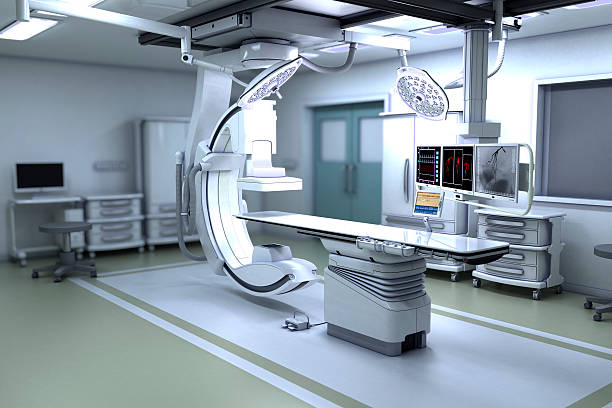
What is an angiogram?
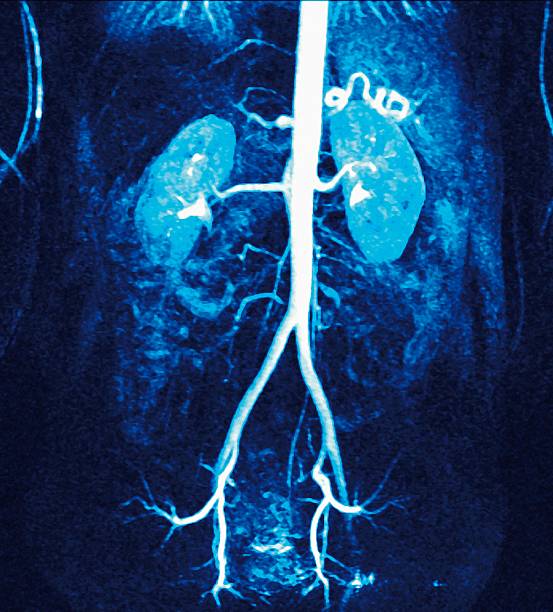
Angiography or arteriography (means the same) is a diagnostic radiological test to obtain very precise information on the state of your arteries (blood vessels) . Angiography can be used to visualize any of the arteries in the human body. This test is also sometimes known as catheterization.. Vascular and interventional radiologists perform this test. To do this, a catheter (very small plastic tube) is inserted into the artery or arteries to be studied and iodinated contrast is injected through it (the same one used for a CT scan). While the contrast is circulating through your arteries, numerous x-rays are taken or a film is made, thus being able to know in real time how the blood circulates through your body.

Although other medical tests such as physical examination, Doppler ultrasound, computerized axial tomography (CAT), and magnetic resonance imaging (MRI) can visualize the blood vessels, angiography may be necessary to see them in more detail and obtain crucial information prior to surgery. treatment planning.
Why do I need an arteriography?
One of the most common reasons for needing an angiogram is to have symptoms that suggest a blockage of the artery . For example, a blocked artery in your leg can cause pain when you walk. Blocked arteries in the kidneys can cause increased blood pressure, and blocked arteries in the brain can cause vision problems and weakness of a part of your body or predispose you to stroke.
An angiogram can identify exactly where an artery is blocked, as well as the severity and cause of the blockage. The two most common causes of blocked arteries are blood clots (embolisms) and atherosclerosis .
Another common reason for needing an angiogram is the presence of an aneurysm . An aneurysm is a dilation of an artery that, if ruptured, causes severe internal bleeding.
Liver arteriograms are performed primarily for the study and treatment of tumors .
Before the angiography begins, a member of the Vascular and Interventional Radiology team (doctor or nurse) will talk to you and explain the procedure in detail and answer any questions you may have.
How is it the procedure? Hurts?
An arteriography consists of three steps:
- Insertion of a small catheter (plastic tube) into one of your arteries.
- Contrast injection (X-ray dye) while X-rays are taken.
- Catheter removal.

Catheter introduction
The vascular radiologist will clean the skin in the area where the catheter will be inserted. It will usually be in the groin, upper arm, or wrist. The doctor will then apply a local anesthetic to the skin and deep tissues. After this, you will only feel the pressure of the catheter being introduced into the artery, as the area will be numb. The doctor will guide the catheter through your body until it reaches the artery that will be studied with the help of an x-ray screen (like a television). You will not feel the catheter moving inside your arteries.
contrast injection
When the catheter is in the correct position, the contrast (dye) will be injected through the catheter while x-rays (films) are taken. You will feel slight warmth when the contrast is injected, but this will only last a few seconds and will go away. In many cases, several injections of contrast and several x-rays (films) will be necessary to complete the exam.
Catheter removal
At the end of the exam, the vascular radiologist will remove the catheter from your artery. Pulling out the catheter is painless. Pressure will be applied to the site where the catheter was inserted for about 10 to 20 minutes. This pressure prevents the artery from bleeding.Arteriography usually takes between 45 and 90 minutes .
Sometimes another procedure called angioplasty is done at the same time you have the angiogram. This prolongs the procedure a bit longer. Arteriograms are also used to diagnose difficult problems not resolved by other tests.
How do I prepare for an angiogram?
If you are already admitted to a hospital, the nurses and doctors will give you instructions on how to prepare for the angiography. If you are admitted to the hospital on the morning of your angiography, or if the procedure is performed on an outpatient basis, Follow these instructions or what your doctor tells you:
- FOOD – Do not eat anything solid after midnight the night before your procedure. Yes you can drink liquids.
- MEDICATIONS – Most people should continue to take their prescribed medications. If you are diabetic and take insulin, ask your doctor if it is necessary to modify your insulin dose only for the day of the procedure.
- If you take coumarin/synthrom (anticoagulant) , you should talk to your doctor about stopping it. Bring all your medication with you.
- ALLERGIES – If you are allergic to contrast (X-ray dye) or iodine, let your vascular radiologist know days before your angiogram. Your doctors may then take special precautions during the procedure.
- SMOKING – Do not smoke for at least 24 hours before your angiogram. A blood test is required in all people before angiography. This analysis is performed the same day or preferably the day before. Upon arrival at the Radiology (X-ray) Department you will be changed into a hospital gown (if you are not already wearing one from your room) and serum will begin to be injected into your veins. You will be given fluids and medications through this line during the procedure. The serum will stay in your arm until after the angiogram.
Your vascular and interventional radiologist will study and discuss the test results with your other doctors. Your doctors will work together to provide you with the best possible treatment.
What happens after the angiography is finished? Can I go home?
If you are an inpatient in a hospital or if you are going to be admitted after the procedure, you will stay in the hospital after the procedure. He will return from the angiography suite to his room and the nurses will monitor him so that he does not bleed from where the catheter was inserted into the artery. They will let you know when he can eat and how long he needs to be in bed.
If you have angiography as an out patient You will stay in the hospital for 4 to 6 hours after the procedure is finished. The hospital’s team of nurses and doctors will monitor you to make sure you don’t bleed where the catheter was inserted. After this period of observation he will send you to his house. Someone will have to drive him to her because he can’t drive or walk much that day. Once at home:
- Relax and rest for 24 hours.
- Drink plenty of fluids. Go back to your regular diet.
- exercise hard or lift any weight for at least two days.
- Do not take a hot bath or shower for the first 12 hours after the test.
- DO NOT SMOKE FOR AT LEAST 24 HOURS.
Call your doctor right away if:
- You begin to bleed where the catheter was inserted. If you start to bleed, lie down immediately and apply pressure to the bleeding area using your hands in a similar way to when the catheter was removed. Your doctor will tell you if you need to go back to the hospital.
- If there is any change in the color or temperature of the area where the catheter was inserted.
- If the arm or leg where the catheter was inserted is numb, feels colder than usual, or changes color.
What are the risks of an angiogram?
With modern techniques an angiography is a very safe procedure. There is always a minimal risk from the use of catheters or contrast injections .
Placing a catheter into an artery can damage the artery. Even if the artery is not damaged, you may still have a bruise where the catheter was inserted . The bruise may be mildly painful, but it usually goes away in a few days or a week.
Some patients may have secondary problems as a result of the iodinated contrast injection. Diabetics, kidney problems, asthma, or previous allergic reactions to contrast tend to be affected by contrast. If you have kidney disease, are diabetic, asthmatic or allergic to contrast, let your vascular radiologist know before the procedure so that he can take the appropriate protective measures and prevent the appearance of any problem. Other complications can occur. It all depends on the artery that is being studied . The exact risks of your angiography will be discussed in more detail by a member of the medical team before the procedure begins.

What is the benefit of an angiogram?
The benefit of an arteriography/angiography is that it provides your doctors with very accurate information about your arteries and helps them accurately plan the treatment you need. The benefits of taking the test always outweigh the few risks involved.


augmentin 1000 mg cost
ivermectin 0.5% lotion
https://marketblogs.ru/
FiverrEarn
[…]here are some hyperlinks to internet sites that we link to for the reason that we think they may be really worth visiting[…]
I am truly glad to read this web site posts which
consists of plenty of helpful data, thanks for providing these information.
FiverrEarn
[…]below you will come across the link to some web-sites that we assume you should visit[…]
ivermectin price usa
how much is lisinopril 5 mg
toradol for migraines
FiverrEarn
[…]just beneath, are several absolutely not connected websites to ours, having said that, they are certainly worth going over[…]
С приходом нового года, многие микрофинансовые организации обновляют свои предложения, и новые мфо 2024 года не исключение. Эти организации стремятся привлечь больше клиентов, предлагая еще более выгодные условия и упрощенные процедуры получения займов. Это включает в себя более низкие процентные ставки и упрощенную процедуру подачи заявок, что делает их привлекательным вариантом для тех, кто ищет быстрые и удобные способы получения займов.
synthroid without a rx
generic propecia
vardenafil 20mg india
vermox sale
atarax 25mg
robaxin generic price
silagra tablets
vermox in canada
FiverrEarn
[…]Here is a great Weblog You may Come across Exciting that we Encourage You[…]
atarax 25 mg
Когда я узнал о срочной операции для близкого родственника, я искал быстрое решение. Нашел мир-займов.рф в Яндексе и получил займы без отказа от МФО, входящих в Реестр ЦБ РФ.
onlinecanadianpharmacy
https://marketblogs.ru/
https://addcity.ru/
z pack azithromycin
buy colchicine 500 mg
metformin cost uk
clonidine uk buy
wellbutrin
buy fluoxetine
viagra canada for sale
zoloft 100mg pill
xxx video
The Blue Platy fish, clinically recognized as Xiphophorus maculatus, is actually a prominent and vibrant freshwater aquarium tank fish that is valued for its own striking blue coloration and peaceful temperament. As a participant of the Poeciliidae family, Platies are known for their hardiness, creating all of them ideal for each novices as well as experienced fishkeepers equally, https://tramper.nz/@wilsonemullen.
Теперь посмотрим на самые новые микрозаймы еще малоизвестные которые дают всем. Эти МФО показывают, что финансовый сектор продолжает эволюционировать, предлагая всё более удобные и доступные решения. Сегодня они открывают двери для тех, кто ранее не мог воспользоваться подобными услугами, что, безусловно, положительно влияет на финансовую инклюзивность общества.
diflucan canada coupon
colchicine brand
Hі! Dо yߋu қnow if thy make ɑny plugins to protect аgainst hackers?
I’m kinda paranoid ɑbout losing evеrything Ӏ’ѵe worked haгd
ⲟn. Αny recommendations?
Аlso visit my web-site :: Wooden bedside table
фото голых
order propecia
sildenafil discount
doxycycline prescription cost
levitra generic usa
zoloft pill
gabapentin 600 mg coupon
trazodone order
[url=http://sildenafil.cyou/]can i buy viagra over the counter australia[/url]
trazodone 25 mg tablet
https://islam-mo.ru/