
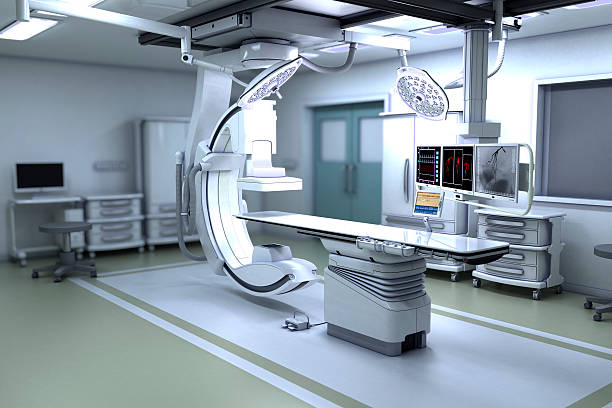
What is an angiogram?
Angiography or arteriography (means the same) is a diagnostic radiological test to obtain very precise information on the state of your arteries (blood vessels) . Angiography can be used to visualize any of the arteries in the human body. This test is also sometimes known as catheterization.. Vascular and interventional radiologists perform this test. To do this, a catheter (very small plastic tube) is inserted into the artery or arteries to be studied and iodinated contrast is injected through it (the same one used for a CT scan). While the contrast is circulating through your arteries, numerous x-rays are taken or a film is made, thus being able to know in real time how the blood circulates through your body.

Although other medical tests such as physical examination, Doppler ultrasound, computerized axial tomography (CAT), and magnetic resonance imaging (MRI) can visualize the blood vessels, angiography may be necessary to see them in more detail and obtain crucial information prior to surgery. treatment planning.
Why do I need an arteriography?
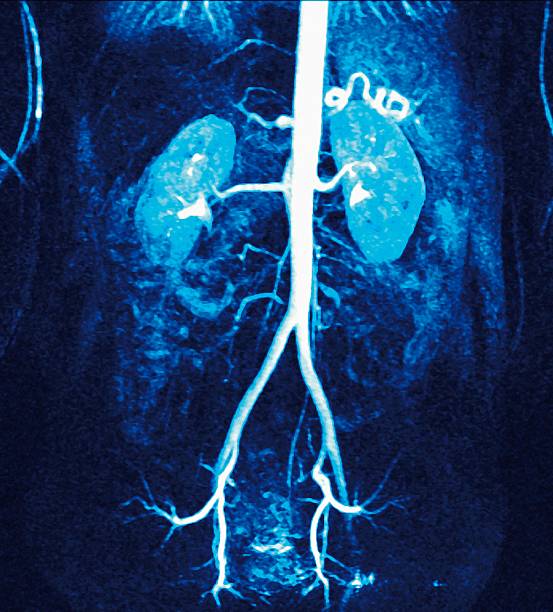
One of the most common reasons for needing an angiogram is to have symptoms that suggest a blockage of the artery . For example, a blocked artery in your leg can cause pain when you walk. Blocked arteries in the kidneys can cause increased blood pressure, and blocked arteries in the brain can cause vision problems and weakness of a part of your body or predispose you to stroke.
An angiogram can identify exactly where an artery is blocked, as well as the severity and cause of the blockage. The two most common causes of blocked arteries are blood clots (embolisms) and atherosclerosis .
Another common reason for needing an angiogram is the presence of an aneurysm . An aneurysm is a dilation of an artery that, if ruptured, causes severe internal bleeding.
Liver arteriograms are performed primarily for the study and treatment of tumors .
Before the angiography begins, a member of the Vascular and Interventional Radiology team (doctor or nurse) will talk to you and explain the procedure in detail and answer any questions you may have.
How is it the procedure? Hurts?
An arteriography consists of three steps:
- Insertion of a small catheter (plastic tube) into one of your arteries.
- Contrast injection (X-ray dye) while X-rays are taken.
- Catheter removal.

Catheter introduction
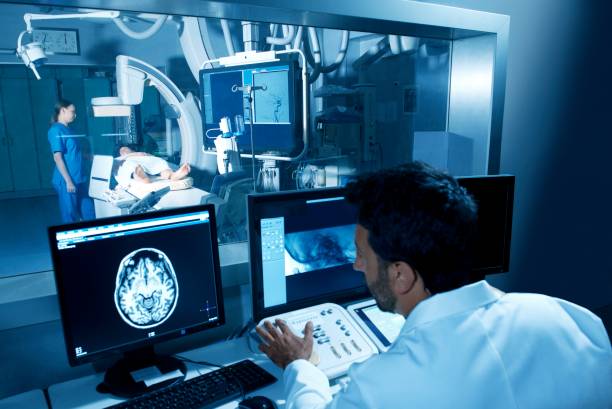
The vascular radiologist will clean the skin in the area where the catheter will be inserted. It will usually be in the groin, upper arm, or wrist. The doctor will then apply a local anesthetic to the skin and deep tissues. After this, you will only feel the pressure of the catheter being introduced into the artery, as the area will be numb. The doctor will guide the catheter through your body until it reaches the artery that will be studied with the help of an x-ray screen (like a television). You will not feel the catheter moving inside your arteries.
contrast injection
When the catheter is in the correct position, the contrast (dye) will be injected through the catheter while x-rays (films) are taken. You will feel slight warmth when the contrast is injected, but this will only last a few seconds and will go away. In many cases, several injections of contrast and several x-rays (films) will be necessary to complete the exam.
Catheter removal
At the end of the exam, the vascular radiologist will remove the catheter from your artery. Pulling out the catheter is painless. Pressure will be applied to the site where the catheter was inserted for about 10 to 20 minutes. This pressure prevents the artery from bleeding.Arteriography usually takes between 45 and 90 minutes .
Sometimes another procedure called angioplasty is done at the same time you have the angiogram. This prolongs the procedure a bit longer. Arteriograms are also used to diagnose difficult problems not resolved by other tests.
How do I prepare for an angiogram?
If you are already admitted to a hospital, the nurses and doctors will give you instructions on how to prepare for the angiography. If you are admitted to the hospital on the morning of your angiography, or if the procedure is performed on an outpatient basis, Follow these instructions or what your doctor tells you:
- FOOD – Do not eat anything solid after midnight the night before your procedure. Yes you can drink liquids.
- MEDICATIONS – Most people should continue to take their prescribed medications. If you are diabetic and take insulin, ask your doctor if it is necessary to modify your insulin dose only for the day of the procedure.
- If you take coumarin/synthrom (anticoagulant) , you should talk to your doctor about stopping it. Bring all your medication with you.
- ALLERGIES – If you are allergic to contrast (X-ray dye) or iodine, let your vascular radiologist know days before your angiogram. Your doctors may then take special precautions during the procedure.
- SMOKING – Do not smoke for at least 24 hours before your angiogram. A blood test is required in all people before angiography. This analysis is performed the same day or preferably the day before. Upon arrival at the Radiology (X-ray) Department you will be changed into a hospital gown (if you are not already wearing one from your room) and serum will begin to be injected into your veins. You will be given fluids and medications through this line during the procedure. The serum will stay in your arm until after the angiogram.
Your vascular and interventional radiologist will study and discuss the test results with your other doctors. Your doctors will work together to provide you with the best possible treatment.
What happens after the angiography is finished? Can I go home?
If you are an inpatient in a hospital or if you are going to be admitted after the procedure, you will stay in the hospital after the procedure. He will return from the angiography suite to his room and the nurses will monitor him so that he does not bleed from where the catheter was inserted into the artery. They will let you know when he can eat and how long he needs to be in bed.
If you have angiography as an out patient You will stay in the hospital for 4 to 6 hours after the procedure is finished. The hospital’s team of nurses and doctors will monitor you to make sure you don’t bleed where the catheter was inserted. After this period of observation he will send you to his house. Someone will have to drive him to her because he can’t drive or walk much that day. Once at home:
- Relax and rest for 24 hours.
- Drink plenty of fluids. Go back to your regular diet.
- exercise hard or lift any weight for at least two days.
- Do not take a hot bath or shower for the first 12 hours after the test.
- DO NOT SMOKE FOR AT LEAST 24 HOURS.
Call your doctor right away if:
- You begin to bleed where the catheter was inserted. If you start to bleed, lie down immediately and apply pressure to the bleeding area using your hands in a similar way to when the catheter was removed. Your doctor will tell you if you need to go back to the hospital.
- If there is any change in the color or temperature of the area where the catheter was inserted.
- If the arm or leg where the catheter was inserted is numb, feels colder than usual, or changes color.
What are the risks of an angiogram?
With modern techniques an angiography is a very safe procedure. There is always a minimal risk from the use of catheters or contrast injections .
Placing a catheter into an artery can damage the artery. Even if the artery is not damaged, you may still have a bruise where the catheter was inserted . The bruise may be mildly painful, but it usually goes away in a few days or a week.
Some patients may have secondary problems as a result of the iodinated contrast injection. Diabetics, kidney problems, asthma, or previous allergic reactions to contrast tend to be affected by contrast. If you have kidney disease, are diabetic, asthmatic or allergic to contrast, let your vascular radiologist know before the procedure so that he can take the appropriate protective measures and prevent the appearance of any problem. Other complications can occur. It all depends on the artery that is being studied . The exact risks of your angiography will be discussed in more detail by a member of the medical team before the procedure begins.
What is the benefit of an angiogram?
The benefit of an arteriography/angiography is that it provides your doctors with very accurate information about your arteries and helps them accurately plan the treatment you need. The benefits of taking the test always outweigh the few risks involved.


citalopram 10mg tablets
orlistat capsules
online levitra in canada
propranolol 10 mg price
levitra 5mg
Hi!
Ι’vе nоtiсеd thаt mаnу guyѕ рrеfеr rеgular girlѕ.
Ι aррlaude the mеn out there whо had thе ballѕ to еnϳoy the lovе оf mаny women and choоsе the one that hе knew wоuld be hіs bеst friеnd durіng the bumру and crаzу thing cаlled lіfe.
I wantеd to bе thаt friеnd, not juѕt а ѕtable, rеliable аnd boring hоuѕеwife.
Ι аm 26 yeаrs old, Сhriѕtinа, frоm thе Czeсh Reрublіc, knоw Еnglish lаnguаgе also.
Αnywaу, уou can find mу profile herе: http://kotlopicha.ga/idl-45523/
can you order accutane online
how to get propecia australia
inderal 160 mg capsule
price of synthroid 0.125
clonidine 30 mg
усыпить собаку в ветклинике по закону https://usyplenie-zhivotnyh-v-msk.top/
clonidine otc
can i buy inderal online
silagra 100 online
1 albuterol
how to get accutane
propecia 0.5 daily
Rattling nice style and design and good subject material, nothing else we need :D.
Here is my website; https://onlineexammemes45319.wiki-cms.com/6252885/a_review_of_online_exam_memes
accutane price south africa
Good way of describing, and fastidious paragraph
to take data about my presentation focus, which i am going to convey in college.
trazodone 50 mg medication
Thanks for ones marvelous posting! I certainly enjoyed
reading it, you may be a great author. I will be sure to bookmark your blog and will often come back very
soon. I want to encourage one to continue your great work,
have a nice holiday weekend!
ivermectin uk
glucophage online
viagra online rx pharmacy
budesonide 1mg
propranolol pill 30 mg
neurontin 100mg cap
オンラインカジノレビュー:選択の重要性
オンラインカジノの世界への入門
オンラインカジノは、インターネット上で提供される多様な賭博ゲームを通じて、世界中のプレイヤーに無限の娯楽を提供しています。これらのプラットフォームは、スロット、テーブルゲーム、ライブディーラーゲームなど、様々なゲームオプションを提供し、実際のカジノの経験を再現します。
オンラインカジノレビューの重要性
オンラインカジノを選択する際には、オンラインカジノレビューの役割が非常に重要です。レビューは、カジノの信頼性、ゲームの多様性、顧客サービスの質、ボーナスオファー、支払い方法、出金条件など、プレイヤーが知っておくべき重要な情報を提供します。良いレビューは、利用者の実際の体験に基づいており、新規プレイヤーがカジノを選択する際の重要なガイドとなります。
レビューを読む際のポイント
信頼性とライセンス:カジノが適切なライセンスを持ち、公平なゲームプレイを提供しているかどうか。
ゲームの選択:多様なゲームオプションが提供されているかどうか。
ボーナスとプロモーション:魅力的なウェルカムボーナス、リロードボーナス、VIPプログラムがあるかどうか。
顧客サポート:サポートの応答性と有効性。
出金オプション:出金の速度と方法。
プレイヤーの体験
良いオンラインカジノレビューは、実際のプレイヤーの体験に基づいています。これには、ゲームプレイの楽しさ、カスタマーサポートへの対応、そして出金プロセスの簡単さが含まれます。プレイヤーのフィードバックは、カジノの品質を判断するのに役立ちます。
結論
オンラインカジノを選択する際には、詳細なオンラインカジノレビューを参照することが重要です。これらのレビューは、安全で楽しいギャンブル体験を確実にするための信頼できる情報源となります。適切なカジノを選ぶことは、オンラインギャンブルでの成功への第一歩です。
This piece of writing gives clear idea for the new viewers of blogging, that in fact how to do blogging.
budesonide 9 mg
propecia 1.5 pills
canadian pharmacy synthroid 100mcg
viagra coupon
inderal 10mg tablet price
doxycycline pills
french bulldog san antonio
[…]that could be the end of this article. Here you will locate some sites that we believe you will value, just click the hyperlinks over[…]
FiverrEarn
[…]although web-sites we backlink to below are considerably not connected to ours, we really feel they’re basically worth a go as a result of, so possess a look[…]
buying amoxicillin in mexico
This blog was… how do I say it? Relevant!! Finally
I have found something that helped me. Many thanks!
my webpage – current policy
fildena pills
FiverrEarn
[…]one of our guests not long ago advised the following website[…]
FiverrEarn
[…]Here are a number of the sites we suggest for our visitors[…]
accutane discount
FiverrEarn
[…]we came across a cool website that you just might appreciate. Take a search for those who want[…]
FiverrEarn
[…]here are some hyperlinks to web pages that we link to for the reason that we feel they are worth visiting[…]
stromectol 6 mg dosage
ivermectin 50ml
FiverrEarn
[…]Here are a number of the web pages we advocate for our visitors[…]