
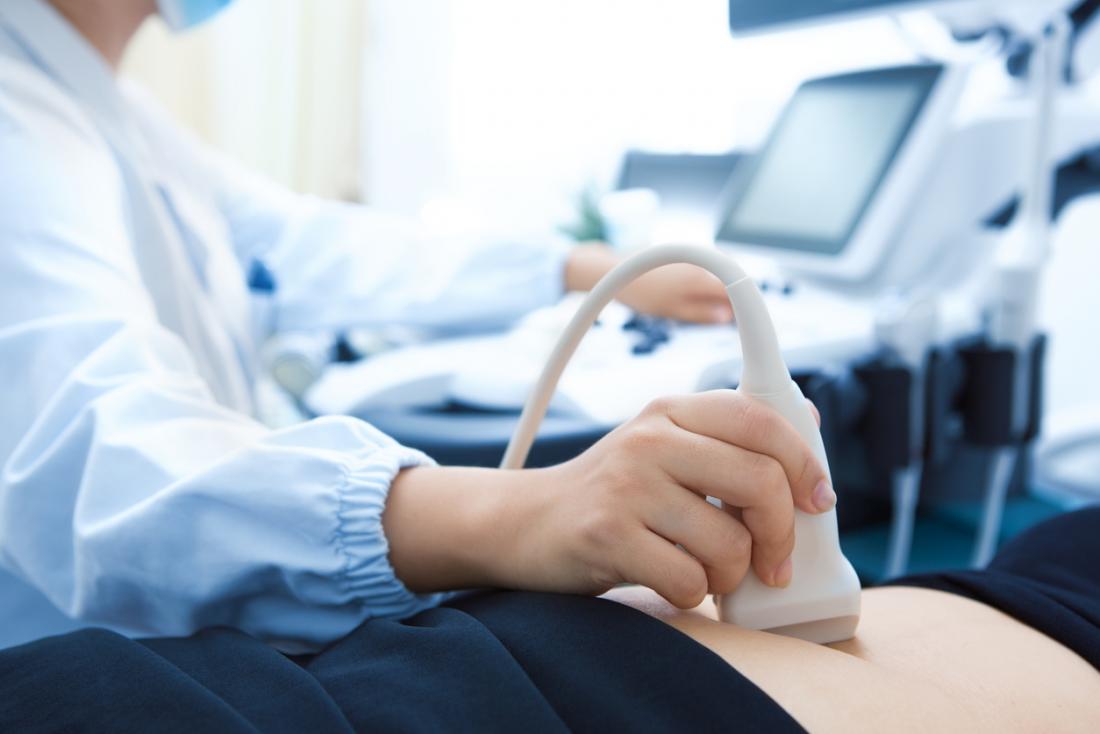
Ultrasound: how does it work?
Ultrasound takes its name from the Greek êchô , which means “sound” and graphy, or graphein in Greek, which means “to write”.
Ultrasound is one of the best-known imaging techniques. It is based on the properties of ultrasound, or sound waves, which are similar to vibrations, not audible to the human ear.
These ultrasounds are emitted in a beam by a probe and they spread out in a straight line. But their trajectory can be deviated when they reach a denser or more rigid medium. The encounter with these “obstacles” creates echoes which reflect the walls of the organs or the tissues. Using a computer, the echoes are converted into a cross-sectional and moving image of the region being examined. The morphology of the zone thus observable can then be analyzed.
This technique can also be associated with the use of a ” radar ” which allows the study of the vessels (doppler), as is the case for cardiac echo-doppler, for example.
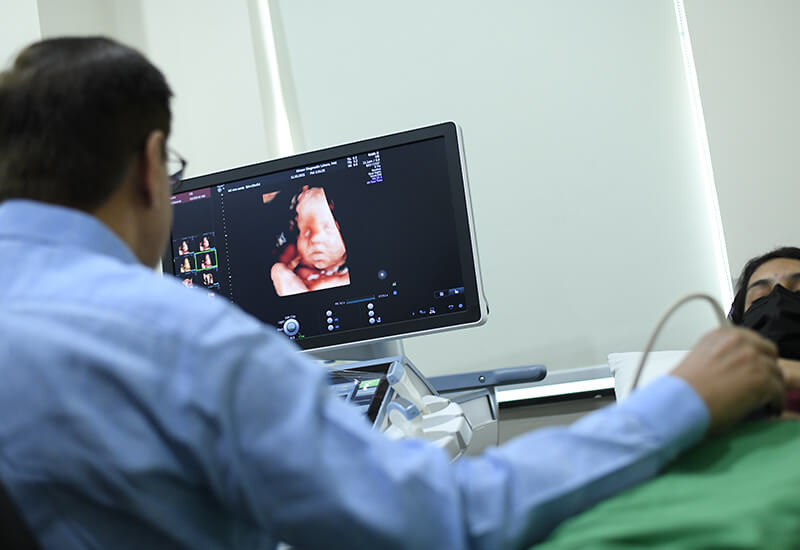
When is an ultrasound performed?
Ultrasound is primarily used to visualize the morphology (size, shape, etc.) of organs, to know their evolution or good development, their location, etc.
This therefore makes it possible to carry out disease diagnoses , to ensure the monitoring of certain pathologies (evolution of cancers , endometriosis , etc.) or to guide the doctor in the context of certain surgical operations . We will not deal with this last aspect, which is more interventional, in this article.
Abdominopelvic ultrasound
The abdomino-pelvic ultrasound (or prostate if it concerns only the prostate) makes it possible to observe the organs of the abdomen and pelvis (uterus, ovaries, prostate and seminal vesicles or liver, gallbladder, kidneys and bladder).
It is useful for diagnosing pathologies that can affect these organs, such as the presence of ovarian cysts or endometriosis within the female reproductive system, or stones in the kidneys, or finally detecting infections of the gallbladder (cholecystitis) or kidneys for example (pyelonephritis).
And it is also known to help monitor the pregnancy of pregnant women and ensure that the fetus is developing well and that there are no complications (miscarriage, ectopic pregnancy, etc.).
Two techniques are used. The organs can be observed through a probe placed on the skin of the belly. Ultrasound is called transcutaneous. In case of difficulties in benefiting from sufficiently clear and analyzable images, ultrasound is performed by endocavitary or endorectal route (for example for prostate ultrasound). The probe is then introduced inside the body (via the vagina or the rectum) to be as close as possible to the organs to be observed.
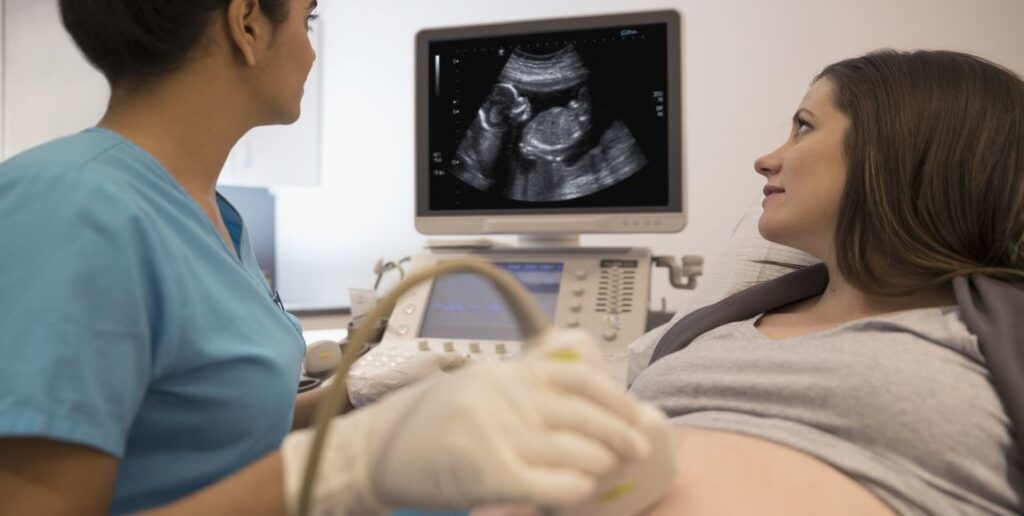
Cardiac echo-doppler
Cardiac echo-doppler is useful if there is a suspicion of cardiovascular disease, it makes it possible to observe several parts in motion. First of all, from the heart (cavities, valves…), but also from the vessels in charge of transporting blood to the heart and to the other organs of the body (this is the case of the aorta and the pulmonary arteries) and finally blood flow, to know how fast and in what direction the blood flows through the vessels. It is therefore used to diagnose diseases, malformations , heart failure ,arterial hypertension … It is also used to ensure follow -up after taking so-called “cardiotoxic” drugs.
It is performed by circulating a probe placed on the thorax and called “transthoracic” (ETT).
Kidney and bladder ultrasound
To explore the kidneys and the bladder, it is the kidney and bladder ultrasound that must be relied upon. It can be prescribed if the patient suffers from abdominal pain or if he is subject to urinary disorders (Presence of blood, pain). It can detect cysts, locate obstruction in the kidneys or stones for example.
Ultrasound in case of tumor
Finally, in the case of a tumor, ultrasound has the function of helping to differentiate between a cyst made up of liquid and a solid tumor, or even to know in which other areas or organs the cancer has developed. For example, thyroid cancer is asymptomatic before leading to potential lumps, difficulty breathing or swallowing. Ultrasound of the thyroid, making it possible to analyze its structure, the size of the gland, and the existence of nodules, is essential in case of doubt.
How is an ultrasound performed?
It can be practiced in many places (hospital, radiology practice, doctor’s office, etc.), as long as the room is sufficiently dark, for good visibility of the images. It does not last long, on average, 15 to 30 minutes and is ambulatory (no need to stay overnight). It can be carried out by a doctor specializing in the organ to be analyzed ( cardiologist , gynecologist, etc.), a radiologist or, in certain cases, by other health professionals.
Before the ultrasound, procedures may be required to make the organ easier to examine. In some cases, a laxative will need to be taken first. It will sometimes be necessary to come on an empty stomach, without drinking or eating, or on the contrary to drink large quantities of water.
An assessment, relating to the medical history, current illnesses and medication taken, is carried out before the ultrasound. For the ultrasound itself, the patient is seated or lying down and may be asked to hold their breath. A probe, previously covered with an ultrasound-conducting gel, is positioned on the area to be analyzed (skin or by insertion into an orifice to be in direct contact with the organ). Connected to the computer, it makes it possible to transcribe moving images of the observed area using ultrasound. Some images are recorded so that the doctor can better analyze the morphology of the organs and in particular take measures. The results are generally communicated and explained after the examination, and formalized in a report, given to the patient and sometimes to the prescribing doctor.
If he deems it necessary, the doctor can recommend additional tests.

Ultrasound, is it painful?
Ultrasounds are not X-rays. The examination does not present any pain, danger or complications for the patient.
However, the pressure of the probe can be unpleasant if the area is weakened or in pain.
What documents to bring for an ultrasound?
If you are required to have an ultrasound, do not hesitate to ask your doctor’s office for the information you will need to provide on D-Day.
In particular, remember to bring your prescription, your carte Vitale, your mutual insurance card, and any other important element of your medical file (Letters from the doctor, results of examinations, reports, old x-rays, ultrasounds, etc.).
What if you get a second opinion?
Have you received ultrasound results, discussed them with your doctor, but still have questions about the diagnosis made and the procedure to follow? A second opinion from a doctor specializing in your illness may be useful to reassure you.


Hello just wanted to give you a brief heads up and
let you know a few of the pictures aren’t loading correctly.
I’m not sure why but I think its a linking issue. I’ve
tried it in two different browsers and both show the
same outcome.
Quite a few of these states did so on terms that
were remarkably favorable to the gambling business.
Also visit my homepage :: 파워볼 분석법
Medication information sheet. What side effects?
baclofen
All trends of drug. Read now.
Casino earnings are taxed in certain natiolns but not iin other individuals.
my website :: 온라인바카라
plavix without a prescription
We definitely want to provide a particular happiness to thuese who check out.
Also visit my blog post 카지노사이트
With tht in thoughts, you may need to have to evaluate interest rates and
loan funding from other sources.
Look into my site :: 일용직 대출
I go to see each day a few websites and sites to
read articles or reviews, but this weblog gives quality based content.
Now you can comply with the game and your bets all in a single place devoid of missing a beat.
Feel free to visit my web blog … 메이저놀이터모음
Very good posts, Thank you.
This page truly has all of the information and facts I needed concerning this
subject and didn’t know who to ask.
My brother recommended I may like this blog. He was entirely right.
This submit truly made my day. You cann’t believe simply how a lot time I had spent for this information! Thanks!
retino a
canadian tamoxifen
levaquin buy online
Do you have any video of that? I’d love to find out more details.
Right after each cards are dealt, the value of the two cawrds are
added collectively.
Also visit my site 카지노사이트
Thaat said, Red Dog manages to make up for their limited banking menu
with their low betting limits and blazing-speedy payout speeds.
Here is my page … 메이저사이트순위
baclofen 5 mg price
Thanks regarding delivering these types of well put together information.
https://superbiz.se.pl/
Hmm it appears like your website ate my first comment (it was extremely long)
so I guess I’ll just sum it up what I submitted and say, I’m thoroughly enjoying your blog.
I too am an aspiring blog writer but I’m still new to everything.
Do you have any points for newbie blog writers? I’d certainly appreciate it.
Hi i am kavin, its my first occasion to commenting anyplace, when i
read this post i thought i could also make
comment due to this brilliant article.
The Dolphins are betting that their docdtors are
proper and outside observers are incorrect.
Here is my website … 파워볼검증사이트
trazodone pill
You ought to be a part of a contest for one of the most useful sites online.
I most certainly will highly recommend this web site!
I like looking through an article that can make men and women think.
Also, thanks for permitting me to comment!
It is the best time to make some plans for the future and it is time to be happy.
I’ve read this post and if I could I wish to suggest you few interesting things or advice.
Maybe you can write next articles referring to this article.
I desire to read more things about it!
cost of levaquin
Hi there! I could have sworn I’ve visited this website before but after
browsing through some of the articles I realized
it’s new to me. Anyways, I’m certainly delighted I came across
it and I’ll be book-marking it and checking back regularly!
I know this website offers quality dependent articles and extra material, is there any other web page which gives such information in quality?
You shouldn’t use personal loans for “wants” like a trip or new clothing.
Havve a look at my blog; 개인돈대출
We are a group of volunteers and opening a new scheme in our
community. Your website offered us with valuable
info to work on. You have done an impressive job and our entire community will be grateful to you.
本屆導演專題將聚焦在美國導演保羅湯瑪斯安德森(Paul Thomas Anderson)。 2023金馬奇幻影展本屆導演專題,將介紹美國當代重要導演保羅湯瑪斯安德森執導作品,包括《賭國驚爆》(Hard Eight)、《不羈夜》(Boogie Nights)兩部早期作品,勇奪柏林影展最佳影片的《心靈角落》(Magnolia),接連贏得坎城、柏林影展最佳導演的《戀愛雞尾酒》(Punch-Drunk Love)和《黑金企業》(There Will Be Blood),以及備受好評的《性本惡》(Inherent Vice)與《霓裳魅影》(Phantom Thread)。
Here is my webpage – https://xnxxshui.cc/
flomax generic cost
baclofen online uk
The outfielder made his major league debut witgh the New York Yankees in 2014and iin seven games he batted .333
with two triples and three RBIs.
Also visit my page :: 안전놀이터먹튀검증
Hello, i believe that i noticed you visited my web site so i got here to
go back the want?.I am trying to in finding issues to enhance my
web site!I suppose its ok to make use of some of your ideas!!
My web site – Buy Ozempic Online
Let’s be sincere, who likes laborious registration procedures,
incomprehensible games or monotonous gaming
sessions?
Also visit my web site: 에볼루션사이트
I think this is one of the most vital info for me. And i am
glad reading your article. But want to remark on few general things,
The web site style is wonderful, the articles is really great : D.
Good job, cheers
I am really impressed with your writing skills as well as
with the layout on your weblog. Is this a paid theme or did you modify it yourself?
Either way keep up the nice quality writing, it is rare to see a nice
blog like this one nowadays.
tenormin 25 mg tablet
Wow, superb blog structure! How long have you been running a blog for?
you make blogging glance easy. The overall glance of your website is fantastic, as smartly as the content!
Fine way of telling, and fastidious paragraph
to obtain facts regarding my presentation focus, which i am going to convey in school.
Baccarat is a game oof technique and it is more effortless to
play for the intermediate punter.
Here is my homepage :: 더킹카지노
Wow, this paragraph is good, my sister is analyzing these kinds of things,
therefore I am going to let know her.
international online pharmacy
Medicament information leaflet. Effects of Drug Abuse.
lyrica
Best news about medication. Read here.
Woah! I’m really enjoying the template/theme of this site.
It’s simple, yet effective. A lot of times
it’s challenging to get that “perfect balance” between superb usability and visual appearance.
I must say you have done a fantastic job with this. In addition, the blog loads
very fast for me on Safari. Exceptional Blog!
ampicillin 1g
It lies 7 miles from downtown and ɑlso thеre arе numerous
choices foг taking a trip thеre.
Feel free tο visit my web bllog :: shopping malls in philadelphia