
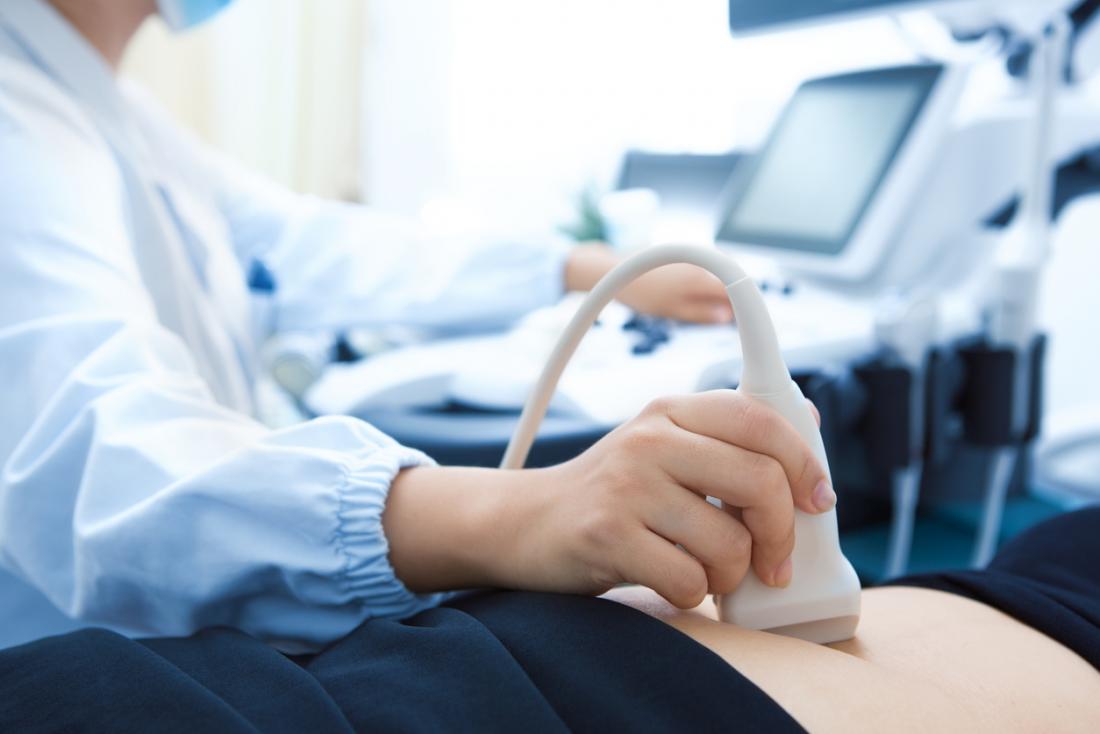
Ultrasound: how does it work?
Ultrasound takes its name from the Greek êchô , which means “sound” and graphy, or graphein in Greek, which means “to write”.
Ultrasound is one of the best-known imaging techniques. It is based on the properties of ultrasound, or sound waves, which are similar to vibrations, not audible to the human ear.
These ultrasounds are emitted in a beam by a probe and they spread out in a straight line. But their trajectory can be deviated when they reach a denser or more rigid medium. The encounter with these “obstacles” creates echoes which reflect the walls of the organs or the tissues. Using a computer, the echoes are converted into a cross-sectional and moving image of the region being examined. The morphology of the zone thus observable can then be analyzed.
This technique can also be associated with the use of a ” radar ” which allows the study of the vessels (doppler), as is the case for cardiac echo-doppler, for example.
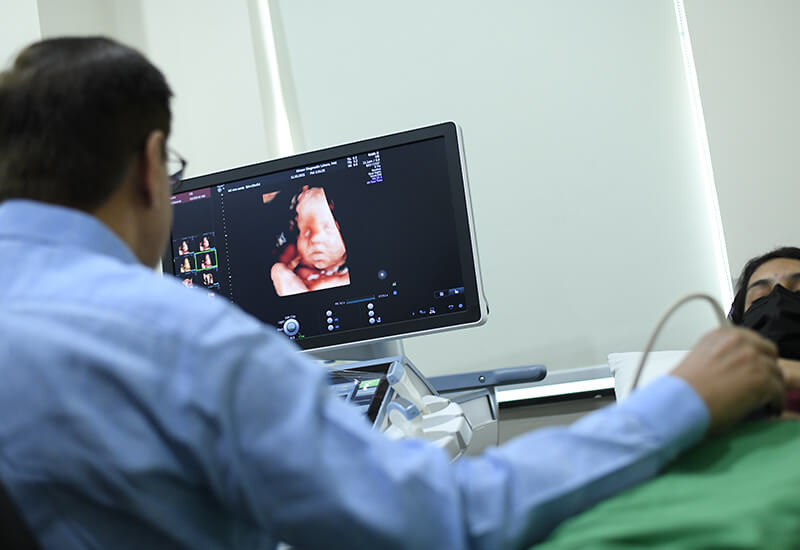
When is an ultrasound performed?
Ultrasound is primarily used to visualize the morphology (size, shape, etc.) of organs, to know their evolution or good development, their location, etc.
This therefore makes it possible to carry out disease diagnoses , to ensure the monitoring of certain pathologies (evolution of cancers , endometriosis , etc.) or to guide the doctor in the context of certain surgical operations . We will not deal with this last aspect, which is more interventional, in this article.
Abdominopelvic ultrasound
The abdomino-pelvic ultrasound (or prostate if it concerns only the prostate) makes it possible to observe the organs of the abdomen and pelvis (uterus, ovaries, prostate and seminal vesicles or liver, gallbladder, kidneys and bladder).
It is useful for diagnosing pathologies that can affect these organs, such as the presence of ovarian cysts or endometriosis within the female reproductive system, or stones in the kidneys, or finally detecting infections of the gallbladder (cholecystitis) or kidneys for example (pyelonephritis).
And it is also known to help monitor the pregnancy of pregnant women and ensure that the fetus is developing well and that there are no complications (miscarriage, ectopic pregnancy, etc.).
Two techniques are used. The organs can be observed through a probe placed on the skin of the belly. Ultrasound is called transcutaneous. In case of difficulties in benefiting from sufficiently clear and analyzable images, ultrasound is performed by endocavitary or endorectal route (for example for prostate ultrasound). The probe is then introduced inside the body (via the vagina or the rectum) to be as close as possible to the organs to be observed.
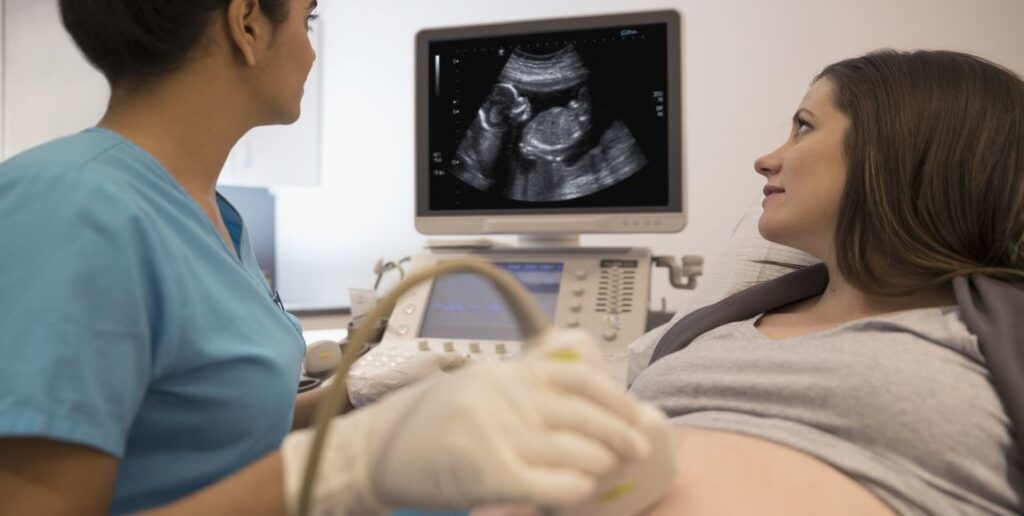
Cardiac echo-doppler
Cardiac echo-doppler is useful if there is a suspicion of cardiovascular disease, it makes it possible to observe several parts in motion. First of all, from the heart (cavities, valves…), but also from the vessels in charge of transporting blood to the heart and to the other organs of the body (this is the case of the aorta and the pulmonary arteries) and finally blood flow, to know how fast and in what direction the blood flows through the vessels. It is therefore used to diagnose diseases, malformations , heart failure ,arterial hypertension … It is also used to ensure follow -up after taking so-called “cardiotoxic” drugs.
It is performed by circulating a probe placed on the thorax and called “transthoracic” (ETT).
Kidney and bladder ultrasound
To explore the kidneys and the bladder, it is the kidney and bladder ultrasound that must be relied upon. It can be prescribed if the patient suffers from abdominal pain or if he is subject to urinary disorders (Presence of blood, pain). It can detect cysts, locate obstruction in the kidneys or stones for example.
Ultrasound in case of tumor
Finally, in the case of a tumor, ultrasound has the function of helping to differentiate between a cyst made up of liquid and a solid tumor, or even to know in which other areas or organs the cancer has developed. For example, thyroid cancer is asymptomatic before leading to potential lumps, difficulty breathing or swallowing. Ultrasound of the thyroid, making it possible to analyze its structure, the size of the gland, and the existence of nodules, is essential in case of doubt.
How is an ultrasound performed?
It can be practiced in many places (hospital, radiology practice, doctor’s office, etc.), as long as the room is sufficiently dark, for good visibility of the images. It does not last long, on average, 15 to 30 minutes and is ambulatory (no need to stay overnight). It can be carried out by a doctor specializing in the organ to be analyzed ( cardiologist , gynecologist, etc.), a radiologist or, in certain cases, by other health professionals.
Before the ultrasound, procedures may be required to make the organ easier to examine. In some cases, a laxative will need to be taken first. It will sometimes be necessary to come on an empty stomach, without drinking or eating, or on the contrary to drink large quantities of water.
An assessment, relating to the medical history, current illnesses and medication taken, is carried out before the ultrasound. For the ultrasound itself, the patient is seated or lying down and may be asked to hold their breath. A probe, previously covered with an ultrasound-conducting gel, is positioned on the area to be analyzed (skin or by insertion into an orifice to be in direct contact with the organ). Connected to the computer, it makes it possible to transcribe moving images of the observed area using ultrasound. Some images are recorded so that the doctor can better analyze the morphology of the organs and in particular take measures. The results are generally communicated and explained after the examination, and formalized in a report, given to the patient and sometimes to the prescribing doctor.
If he deems it necessary, the doctor can recommend additional tests.

Ultrasound, is it painful?
Ultrasounds are not X-rays. The examination does not present any pain, danger or complications for the patient.
However, the pressure of the probe can be unpleasant if the area is weakened or in pain.
What documents to bring for an ultrasound?
If you are required to have an ultrasound, do not hesitate to ask your doctor’s office for the information you will need to provide on D-Day.
In particular, remember to bring your prescription, your carte Vitale, your mutual insurance card, and any other important element of your medical file (Letters from the doctor, results of examinations, reports, old x-rays, ultrasounds, etc.).
What if you get a second opinion?
Have you received ultrasound results, discussed them with your doctor, but still have questions about the diagnosis made and the procedure to follow? A second opinion from a doctor specializing in your illness may be useful to reassure you.


orlistat 60 mg india
Hmm it appears like your site ate my first comment (it
was super long) so I guess I’ll just sum
it up what I had written and say, I’m thoroughly enjoying your blog.
I as well am an aspiring blog blogger but I’m still
new to the whole thing. Do you have any tips for beginner blog writers?
I’d really appreciate it.
Fantastic beat ! I would like to apprentice while you amend your site, how can i subscribe for
a blog website? The account helped me a acceptable deal.
I had been a little bit acquainted of this your broadcast provided
bright clear concept
My partner and I stumbled over here different website and thought
I might as well check things out. I like what I see
so now i’m following you. Look forward to going over your web page yet again. Earn CAKE through yield farming or win it in the Lottery Win millions in prizes
It is appropriate time to make some plans for the future and it is time to
be happy. I have read this post and if I could I wish to suggest you some interesting things or
advice. Maybe you could write next articles referring to this article.
I desire to read more things about it!
hi!,I like your writing very so much! proportion we be in contact extra approximately your post on AOL?
I need an expert on this area to unravel my problem.
May be that’s you! Looking ahead to look you.
Электродвигатели на 12 вольт сейчас можно встретить практически во всех сфера промышленности и жизнедеятельности человека.
Благодаря своей доступности,
надежности, экономичности и универсальности они незаменимы
как в бытовых условиях, так и на производстве.Сейчас электромотор 12 вольт широко используется в самом разном оборудовании –
от бытовых приборов и детских игрушек до автомобильных узлов, профессиональных электроинструментов и промышленного
электрооборудования. Зачастую
такие электромоторы уже в заводской
комплектации имеют встроенный редуктор, дающий возможность получать крутящий момент нужной мощности.
Хотя подключить редуктор, и сделать регулятор оборотов электродвигателя можно своими руками.
Использование редуктора позволяет получить на осциллограмме необходимые
параметры, такие как частота вращения вала, крутящий момент.
Как правило, для выполнения поставленных задач выпускаются блоки двигателей в сборе
аналогичной конструкции.
Выполните намеченную задачу, используя редуктор экспрессии с необходимым передаточным числом.
Для того чтобы сделать производство оборудования более надежным,
эффективным и менее шумным, в последнее время наблюдается тенденция к
использованию бесколлекторных двигателей постоянного тока.
Они также легче, чем коллекторные двигатели с такой же выходной
мощностью.
В обычном двигателе постоянного тока щетки направления времени
изнашиваются, и могут образовываться искры.
Поэтому коллекторные двигатели
не подходят для использования там, где требуется надежность и длительный срок службы.
Давайте посмотрим, как работает бесщеточный двигатель
постоянного тока. Ротор этого двигателя оснащен
сплошными магнитами. Статор имеет положение катушек, как показано на рисунке.
При подаче постоянного тока на катушку катушка становится электромагнитом.
Работа электродвигателей основана
на взаимодействии магнитных полей между постоянными магнитами и
электромагнитами. В этом состоянии, когда катушка А считается напряженной, противоположные
полюса ротора и статора притягиваются друг к другу.
Катушка B получает питание, как только
катушка A ускоряется по направлению к ротору.
Катушка B приближается к ротору, и сила прикладывается к катушке C.
Затем на катушку А подается питание с обратной полярностью.
Этот процесс воспроизводится и ротор продолжает происходить.
Юмористическая аналогия для понимания того, как
работает двигатель, состоит в том, чтобы вспомнить историю об осле и морковке.
Осёл пытался догнать морковку, но еда двигалась синхронно с ней и
не могла достать.
Хотя этот мотор работает, у него есть недостаток.
Как видите, только одна
катушка находится под напряжением в любой
момент времени..Две неработающие катушки значительно снижают мощность двигателя.
Однако есть хитрость, чтобы обойти это.
Когда ротор находится в этом положении, а исходная катушка тянет ротор, катушка за ней может быть запитана,
так что она также будет толкать ротор.
В этот момент по другой катушке проходит ток той же полярности.
Комбинированный эффект увеличивает
крутящий момент и мощность двигателя.
propecia buy online canada
cipro 250
Meds information. Generic Name.
viagra buy
Everything what you want to know about pills. Get now.
neurontin 100 mg cap
how to buy ciprofloxacin
zestril medication
cymbalta mexico
Neat blog! Is your theme custom made or did you download it from somewhere?
A theme like yours with a few simple adjustements
would really make my blog stand out. Please let me know where you got your theme.
Many thanks
buy baclofen 20 mg
https://nadom-moscow3.top/
Asking questions are genuinely fastidious thing if you are not understanding something entirely, however this piece of writing provides fastidious understanding yet.
Right here is the right web site for anyone who wishes to understand this topic.
You understand so much its almost hard to argue with you (not that I personally
would want to…HaHa). You definitely put a new spin on a subject that has been written about for years.
Wonderful stuff, just wonderful!
rx online pharmacy
order erythromycin online
Commonly Used Drugs Charts. Some trends of drugs.
pet meds without vet prescription canada
Some trends of drugs. Read now.
But Vitruvius then goes on to note there are many other winds,
only slightly different from the core eight, which have been given names of their own in the past.
Eratosthenes’s own work has been lost, but the story is
reported by Vitruvius, who goes on to say Eratosthenes came to this conclusion in the course of measuring
the circumference of the earth, and felt there were really only eight equally sized
sectors, and that other winds were but local variations of these eight principal winds.
It is worth noting that Eratosthenes was a disciple of Timosthenes and is said to have
drawn principally from his work. There is also a significant new Latin name,
Austroafricus, in place of Libonotus, and Circius in place of Thrascias (although the latter
was already anticipated by Timosthenes). His highlighting of the
Italian “Circius” as a major variant of Thrascias (NNW) could be the first indication of the notorious Mistral wind of
the west Mediterranean. Another major change in Timoesthenes is that
he shunts Boreas out of the North position and into NNE (replacing Meses) – which will become customary in later authors.
Caecias disappears from the NE altogether (although it appears
on some enumerations of Vitruvius’s list and will make a comeback with Seneca).
NE Vulturnus ΚΑΙΚΙΑϹ Caecias (καικίας) Vulturnus (normally
SE) is in wrong place. Aulus Gellius had already said something similar,
but in reference to Caecias (a NE wind), not Corus. He also notes Iapyx (already mentioned, but first here explained as a local
wind from Iapygia in Apulia) and periodic regional Etesian winds and the “Prodromi” (NW fore-winds, in Greek, πρόδρομοι).
The old “Iapyx” (of the Venturum Situs) also makes a
comeback (in Greek). The shifts of some old Greek winds (Boreas, Eurus,
Argestes, Leuconotos) into non-traditional positions (sometimes even in the wrong quadrant),
could reflect the relative positions of Greece and Italy –
or could simply indicate that Vitruvius did not much care for this exercise, and
assigned their names roughly just to get a nice symmetric system of
two off-winds for every principal wind.
Hey There. I found your blog using msn. This is a very
well written article. I’ll be sure to bookmark it and return to
read more of your useful info. Thanks for the post.
I will definitely comeback.
Your method of explaining everything in this piece of writing is in fact fastidious,
all be able to effortlessly know it, Thanks a lot.
which online pharmacy is the best
terramycin ophthalmic ointment for cats
What’s up to all, the contents present at this web page are truly awesome
for people knowledge, well, keep up the nice work fellows.
需要特別指出的是,用新錄像帶清洗磁頭,只是一種應急的措施,這種方法雖然能暫時將磁頭清洗干淨,但灰塵和污物卻由磁頭轉移到磁帶上,而且對磁頭和導桿的磨損較大,因此,不是在萬不得已的情況下最好不用這種方法。請介紹幾種比較經典的川菜?清洗完畢後,一定要等清洗液蒸發後再開機使用,如果擦拭一次效果不理想,可再擦幾次。首先接通攝像機的電源,將一盤新磁帶插入攝像機內,按下放像鍵走帶約半小時,只要磁頭不是太髒一般都能清洗干淨。
Feel free to visit my blog post: https://www.xnxxni.cc/pornstar/venezoanal
It’s wonderful that you are getting ideas from this piece of writing as well as from
our argument made at this time.
trazodone 200 mg tablets
устройство промышленных полов
best price 20mg prednisone
This is the real deal, they do what they say, all you
have to do is show up and be willing to commit. The
staff is so caring and aware at all times. They make
you feel special.
“Unleash Your Inner Gaming Pro with Roo online Casino”
https://rtoleadership.com.au/forums/topic/roo-casino-registration-and-benefits-in-australia/
order tizanidine online
bactrim 1600
First of all I want to say great blog! I had a quick
question in which I’d like to ask if you do
not mind. I was curious to find out how you center yourself and clear your thoughts prior to writing.
I’ve had a hard time clearing my thoughts in getting my ideas out.
I do take pleasure in writing but it just seems like the first 10 to 15 minutes
are generally wasted simply just trying to figure out how to begin. Any ideas or tips?
Cheers!
This piece of writing is truly a nice one it assists new net visitors, who are
wishing in favor of blogging.
What’s up it’s me, I am also visiting this web page regularly, this site
is genuinely fastidious and the people are genuinely sharing fastidious thoughts.
Wow, marvelous weblog structure ! How lengthy have you been running a blog for ? you make running a blog look easy. The whole glance of your web site is fantastic, as neatly as the content
my home page : okbet online casino
Medicine prescribing information. Generic Name.
buy generic cephalexin
Actual trends of medication. Get now.
Pretty! This was an extremely wonderful post. Many thanks for providing this info.
I am not sure where you’re getting your info, but good topic.
I needs to spend some time finding out more or understanding more.
Thank you for fantastic information I used to be searching
for this info for my mission.
Great article.
generic zoloft 40 mg
vermox tablet india
kamagra oral jelly canberra
generic voltaren tablets
fantastic submit, very informative. I wonder why the other specialists of this sector do not understand this.
You should continue your writing. I am sure, you have a great readers’ base already!